


NATURAL FIBRES WITH TRADITION
The Andean Legacy
Two treasures of the Andes
Above 3,500 meters, where the air is thin and the sun feels closer, live the Alpaca and the Vicuña, two treasures of the Andes. Andean peoples recognized their value more than six thousand years ago. Today, that same nobility is the raw material of every Sol Alpaca piece.
Fiber 01
Alpaca
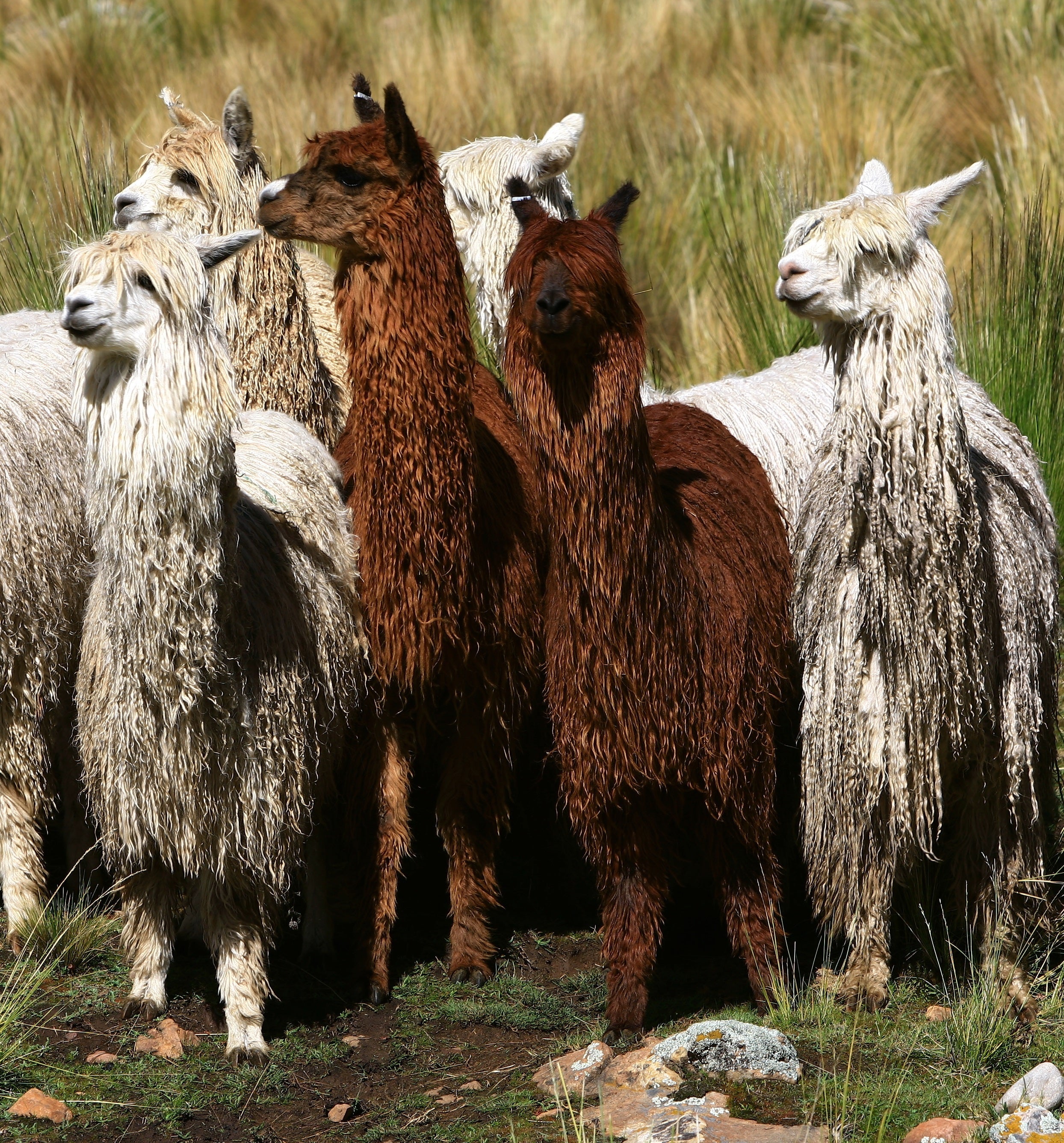
Peru is home to nearly 85% of the world’s Alpacas, and most graze in Puno, Cusco and Arequipa. Its fiber is fine, soft and highly thermal, and comes in more than twenty natural shades, from the purest white to the deepest grays, beiges, browns and blacks.
Dense, wavy fiber with a fluffy look. The widest range of natural colors.
Long, silky, lustrous fiber that falls in vertical locks.
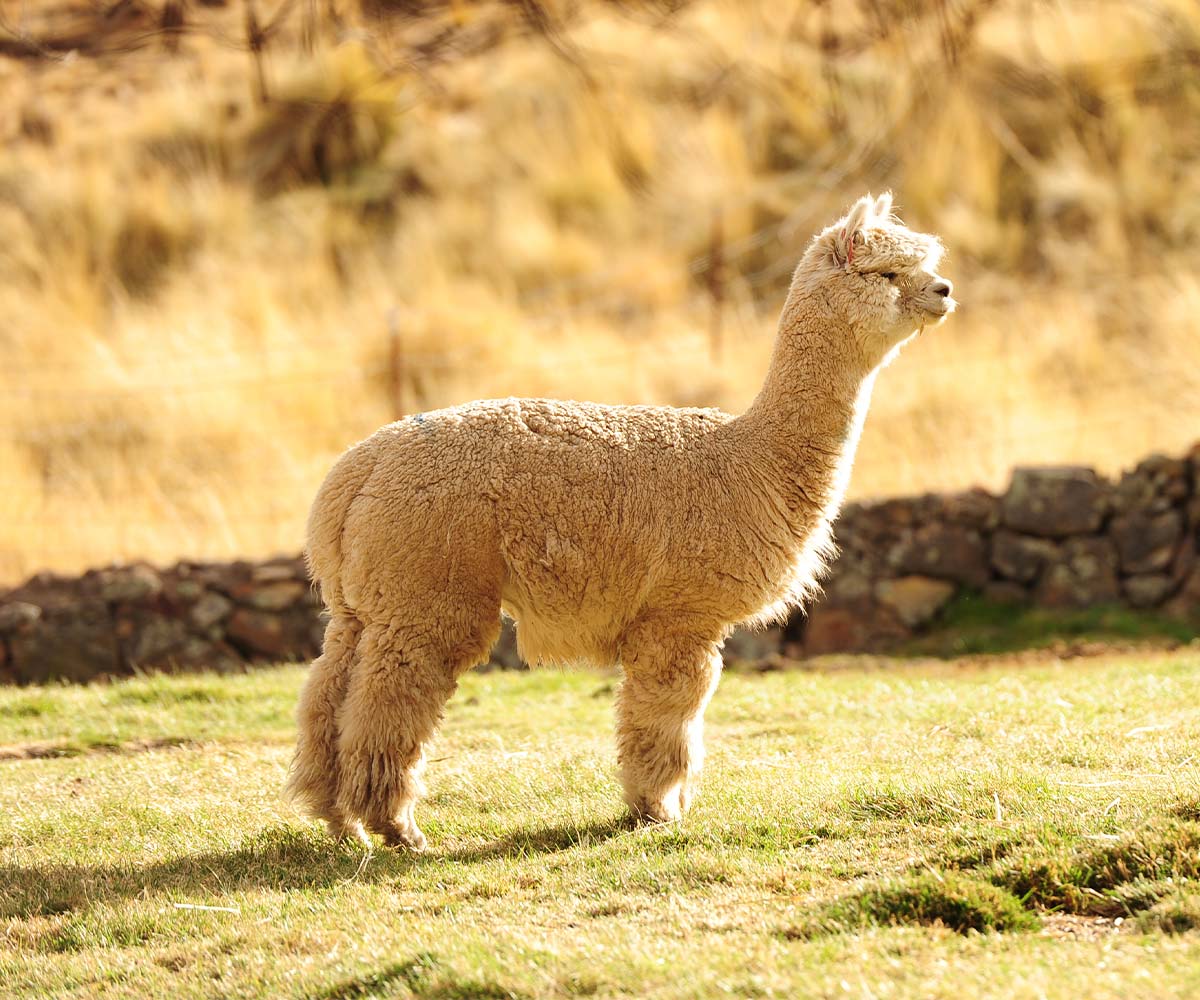
Huacaya
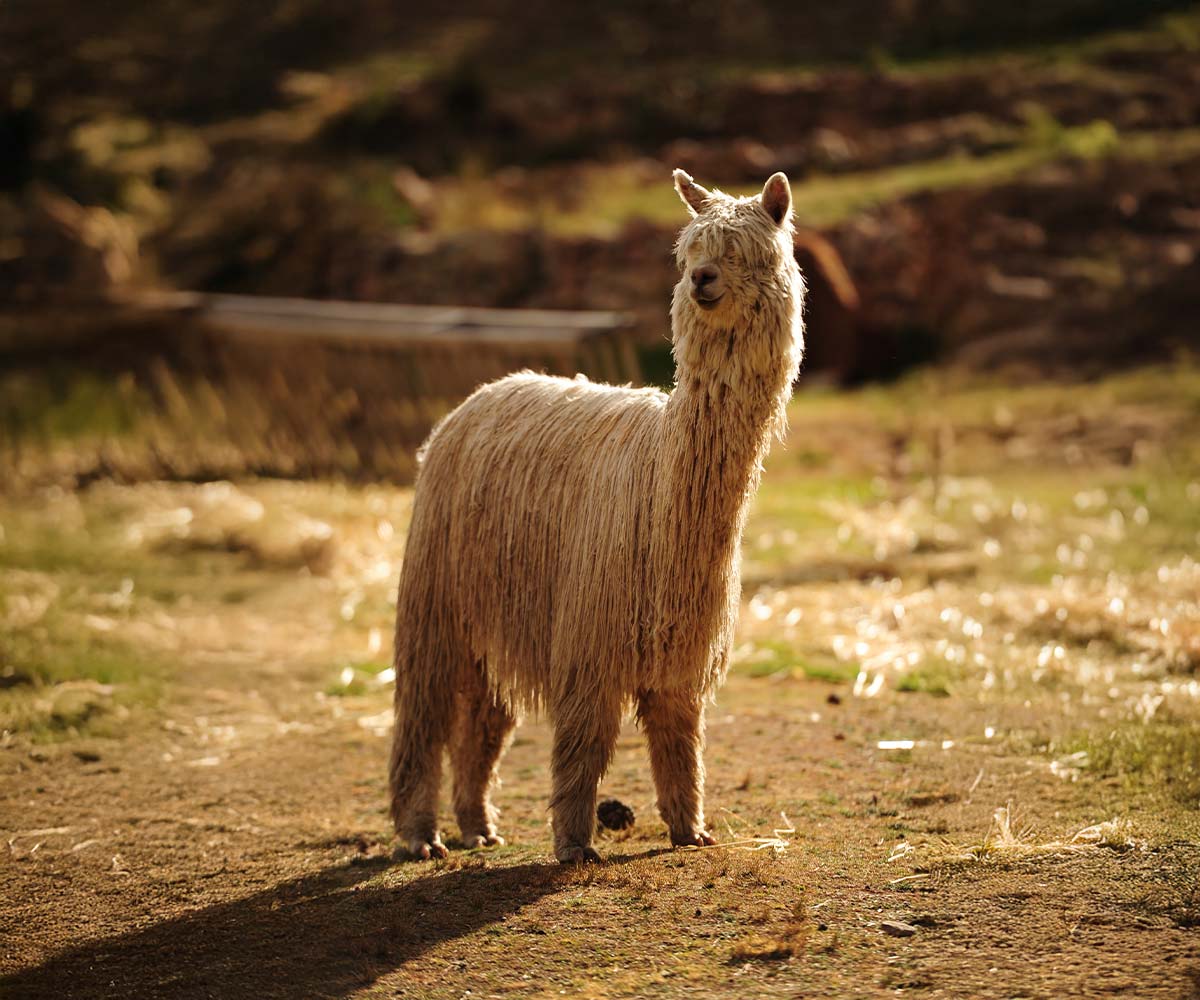
Suri
Textil Fibers
When it comes to choosing a textile fibre, not all options are created equal. Alpaca is not just another option: it is the fibre that redefines the standards of quality, sustainability and comfort. For centuries, the Andean peoples have regarded it as a treasure. Today, the luxury fashion and design industry confirms this.

Colour Purity and Visual Sustainability
Over 20 natural, undyed shades.
Whilst other fibres rely on chemical processes to achieve a range of colours, alpaca comes into the world ready to shine. This not only means richer, more authentic colours, but also a cleaner, more environmentally friendly production process.

Durability and Structural Strength
Timeless durability
Unlike conventional cotton or wool, Alpaca fibre resists moisture and microorganisms without deteriorating. An Alpaca garment isn’t just a purchase: it’s an investment that will last you for decades

Dermatological Excellence and Organic Composition
Uncompromising softness and hypoallergenicity
It contains no lanolin, the protein responsible for the most common allergies associated with animal fibres. The result is a naturally smooth fibre that is soft to the touch and suitable even for the most sensitive skin. What other fibres promise through treatments, Alpaca delivers by nature.

Natural Thermal Engineering
High-performance thermoregulation
The hollow structure of its fibres traps air and regulates body heat with an efficiency that synthetics can never match and that ordinary wool struggles to achieve. It keeps you warm when it’s cold, without making you feel stuffy.

Environmental Ethics and Ecosystem Regeneration
Sustainable from the ground up
Alpacas graze without uprooting plants, allowing the Andean ecosystem to regenerate naturally. Furthermore, they require significantly less feed than other fibre-producing animals, such as cashmere or angora goats. Choosing Alpaca means choosing a production cycle that respects the land.

Safety and Passive Protection
Safe and practical
Its natural resistance to combustion makes it a safer choice in environments where this is important, without the need for additional fire-retardant treatments.

Textile Versatility and Shape Memory
Elasticity and performance when spun
Its natural, uniform crimp allows for the creation of flexible, strong and continuous yarns that retain their shape wash after wash.

How is the quality of alpaca fibre measured?
Micronage
Not all Alpaca fibre is the same, and this is where one of the most important concepts in the textile world comes into play: micronage, also known as fibre fineness.
Micronage measures the diameter of each fibre strand in micrometres (µm), a unit a thousand times smaller than a millimetre. The lower the micronage, the finer the fibre, and consequently, the softer, lighter and more luxurious it feels to the touch. This measurement is the technical criterion that determines the quality and value of a fibre on the international market.
To put this into perspective: a human hair measures between 60 and 80 microns. The highest-quality Alpaca fibre can measure less than 18 microns, making it imperceptibly soft against the skin.
Below you will find a table showing the different quality categories of alpaca fibre according to their micron count, so that you can accurately identify the level of fineness you are choosing
| Code | Type of alpaca fiber | Micronage (mic.) |
|---|---|---|
| SP | Supreme Alpaca | 17-18 mic. |
| BL-SUPER | Superbaby Alpaca | 19 - 20 mic. |
| BL | Baby Alpaca | 21 - 22.5 mic. |
| FS | FS Alpaca | 25.5 - 26.5 mic. |
| SU-BL | Baby Suri Alpaca | 22.5 mic. |
| SU | Suri Alpaca | 27.5 mic. |
| AG | Coarse Alpaca | +30 mic. |
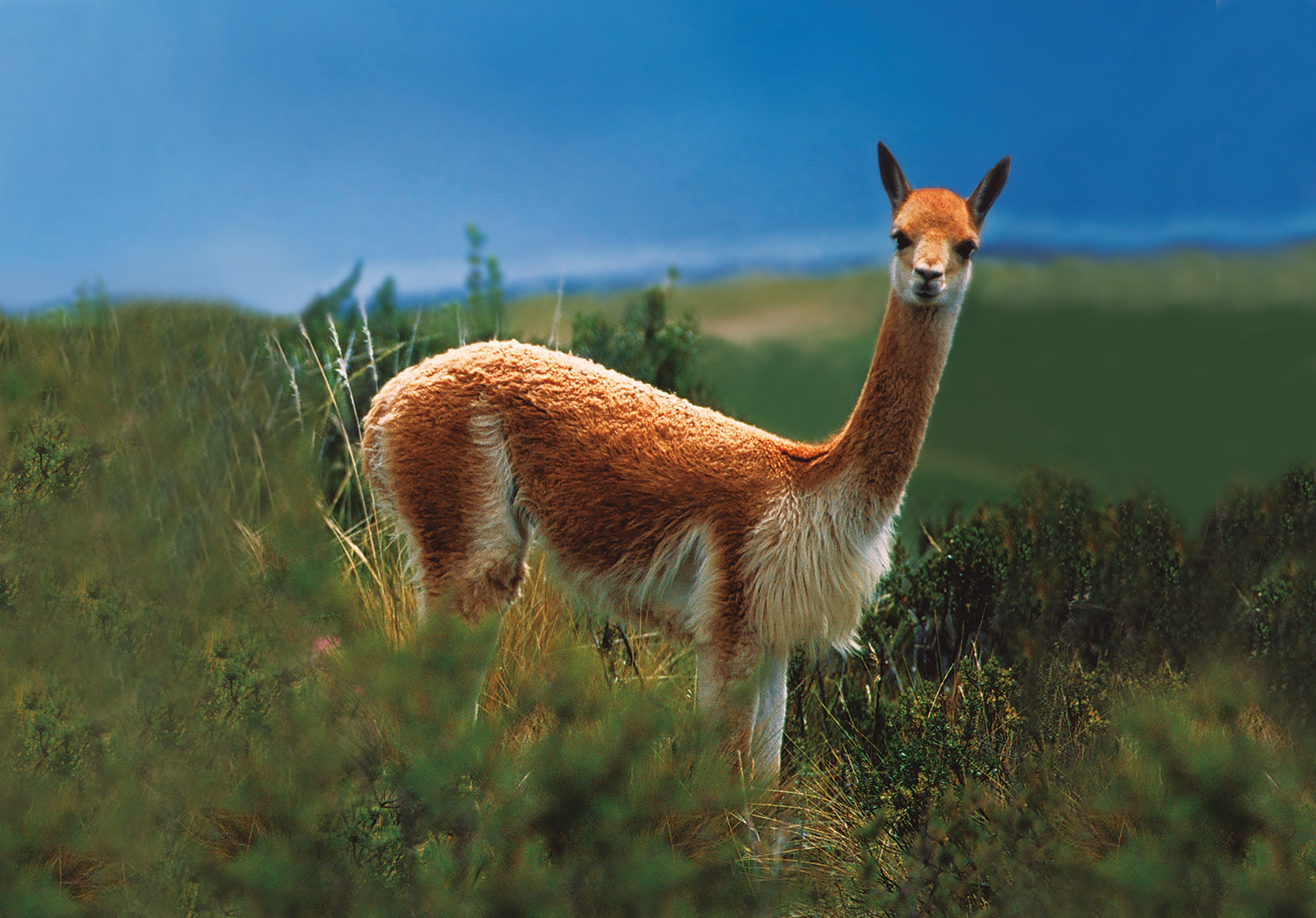
Vicuña
The smallest and most elusive of the Andean animals. To the Incas it was sacred: its garments were reserved for royalty, and its fiber was called the fiber of the gods.
It came close to extinction in the 1960s and today, thanks to community-based conservation in Peru, it is no longer endangered. Its fiber, at around 12 microns, is considered the finest in the world, and each animal yields barely 250 grams of fleece.
To wear Vicuña is to wear the rarest thing in the textile world: a fiber obtained in small quantities, from wild animals, thanks to the work of Andean communities.
Keep discovering
Our commitment